

Article: What Does the Number on Sunglasses for Men Mean?
What Does the Number on Sunglasses for Men Mean?
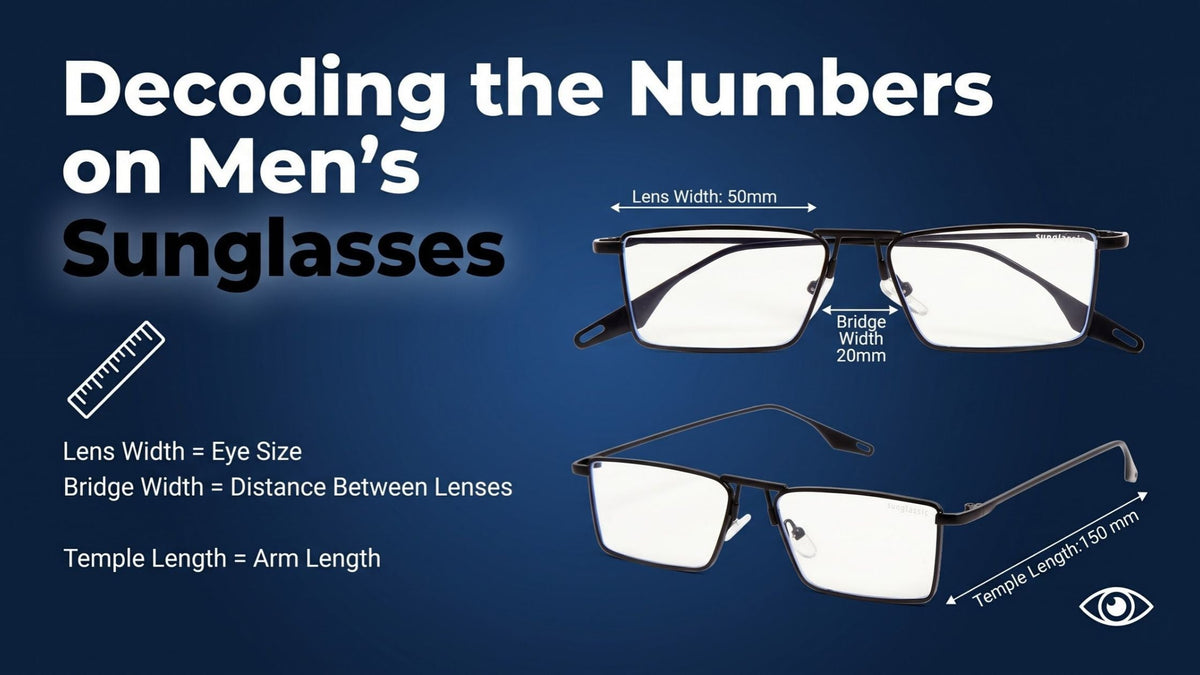
Have you ever noticed a series of numbers printed on the inside of your sunglasses' arms and wondered what they mean? You might see something like 52-18-145 or 55-20-140 on a frame. These numbers are not random codes. They represent important measurements that help you understand the size and fit of your sunglasses.
Whether you are shopping for everyday eyewear, planning a holiday, or searching for the best sunglasses for men, understanding these numbers can make choosing the right pair much easier. The correct measurements can help you find frames that sit comfortably on your face, complement your features, and suit your personal style.
At Sunglassic.com, choosing sunglasses becomes easier when you know what to look for. In this guide, we will explain what sunglasses numbers mean, how to read frame measurements, the difference between lens width and bridge size, and how to choose the ideal fit for your face.
What Do the Numbers on Sunglasses for Men Mean?
Most sunglasses have three primary measurements printed on the inside of one temple arm. These measurements are usually expressed in millimetres and help describe the size of the frame.
For example, if your sunglasses display 52–18–145, the numbers generally represent:
-
52 mm: Lens width
-
18 mm: Bridge width
-
145 mm: Temple arm length
These measurements are useful when comparing different sunglasses, particularly when shopping online. If you already own a pair that fits well, checking its numbers can help you find similar-sized frames.
However, the three measurements do not always tell you the complete width or shape of the sunglasses. Frame design, lens height, nose fit, and the overall construction also influence how a pair looks and feels.
Sunglasses Size Explanation Chart
| Number | Measurement | What It Means |
|---|---|---|
| 52 | Lens width | Horizontal width of one lens |
| 18 | Bridge width | Distance between the lenses across the nose bridge |
| 145 | Temple length | Length of each arm extending towards the ears |
Example: A frame marked 52–18–145 has lenses approximately 52 mm wide, a bridge measuring 18 mm, and temple arms approximately 145 mm long.
Understanding this simple chart is the first step towards finding the best sunglasses for men that fit comfortably and look proportionate.
1. Lens Width: Understanding the First Number
The first number printed on most sunglasses frames indicates the horizontal width of one lens, measured in millimetres. It is commonly called the eye size.
For example, in a frame marked 54–19–145, the lens width is 54 mm.
Lens width can affect the overall appearance of your sunglasses. Smaller lenses often create a compact, understated look, while wider lenses may offer a bolder appearance.
Here is a general guide to lens widths:
| Lens Width | General Fit Category | Common Appearance |
|---|---|---|
| 45–49 mm | Smaller | Compact and subtle |
| 50–53 mm | Small to medium | Balanced and versatile |
| 54–57 mm | Medium to large | Classic everyday proportions |
| 58–62 mm | Larger | Broad and statement-making |
These categories are approximate rather than universal. The best fit also depends on frame shape, the distance between your eyes, and the overall dimensions of the design.

How Does Lens Width Affect Your Look?
If you prefer subtle eyewear, smaller lens widths may suit your style. If you like bold frames, larger lenses may create a more prominent look.
Rectangle sunglasses, square frames, aviators, and round sunglasses can all look different even when they have the same lens width. This is because their shapes, lens heights, and bridge designs influence their appearance.
When choosing the best sunglasses for men, do not rely on lens width alone. Compare the complete frame dimensions and check how the shape complements your face.
2. Bridge Width: The Second Number Explained
The second number represents the bridge width. This measurement describes the distance between the two lenses across the nose area.
For example, a frame marked 52–18–145 has a bridge width of 18 mm.
Bridge size matters because it influences how sunglasses sit on your nose. If the bridge is too wide, the frame may slide down. If it is too narrow, the sunglasses may feel uncomfortable or sit incorrectly.
What Bridge Size Should You Choose?
| Bridge Width | General Consideration |
|---|---|
| 14–16 mm | Often found on some narrower bridge designs |
| 17–19 mm | Common in many everyday frames |
| 20–22 mm | Often found in wider bridge designs |
| 23 mm or more | May suit particular frame styles and nose shapes |
These ranges are only a starting point. Different frame constructions, nose pads, and bridge shapes can change how a particular measurement fits.
For example, two pairs of sunglasses may both have an 18 mm bridge but sit differently because one has adjustable nose pads and the other has an integrated bridge.
Why Bridge Fit Matters for Men
A well-fitting bridge helps keep sunglasses in position without creating excessive pressure. This becomes especially important if you wear your goggles for long periods while travelling, driving, or spending time outdoors.
When shopping for the best sunglasses for men, look for a bridge that rests comfortably and keeps the lenses properly positioned in front of your eyes.
3. Temple Length: Understanding the Third Number
The third number generally represents the temple length, which is the length of the arms extending from the frame towards your ears.
For example, in 52–18–145, the temple length is 145 mm.
Temple length influences how comfortably the arms reach behind your ears. Arms that are too short may not sit securely, while arms that are too long may extend unnecessarily or fit poorly depending on their shape.
Common temple lengths include approximately 135 mm, 140 mm, 145 mm, and 150 mm.
| Temple Length | General Fit Consideration |
|---|---|
| 135–140 mm | May suit some smaller or shorter-temple designs |
| 145 mm | Common in many adult sunglasses |
| 150 mm or longer | May suit some larger or longer-temple designs |
These measurements are not strict sizing rules. The curvature of the arms and the shape of the frame also affect comfort.
If your sunglasses leave pressure marks around your ears or constantly slip forward, temple length and arm curvature are worth checking.
4. Difference Between Lens Width and Total Frame Width
One common mistake when buying sunglasses online is confusing lens width with total frame width.
Lens width measures only one lens, whereas total frame width measures the sunglasses from one outer edge to the other.
For example, sunglasses with a lens width of 55 mm do not have a total frame width of 55 mm. The complete width also includes the bridge and the outer portions of the frame.
A simplified estimate for a symmetrical frame is:
Total width ≈ (2 × lens width) + bridge width + outer frame allowances
For a frame with 55 mm lenses and a 19 mm bridge, the combined lens and bridge measurement is approximately 129 mm before adding the outer frame allowances.
This is only an estimate because hinges, end pieces, frame thickness, and design shape affect the actual total width.
Why Total Width Matters
If your sunglasses are too narrow, the arms may press against the sides of your head. If they are too wide, they may extend too far beyond your face or feel unstable.
When searching for the best sunglasses for men, compare the total frame width with a pair you already wear comfortably. If the product page provides only lens, bridge, and temple measurements, use them as a guide rather than treating them as the complete frame dimensions.

5. Small, Medium, and Large Sunglasses: What Is the Difference?
Sunglasses are often described as small, medium, or large. These labels help shoppers narrow their choices, but there is no single universal sizing standard followed by every eyewear brand.
| Size Category | General Characteristics | May Suit |
|---|---|---|
| Small | More compact overall proportions | People who prefer a narrower fit |
| Medium | Balanced proportions | Many everyday eyewear shoppers |
| Large | Wider or more prominent frames | People who prefer broader frames |
Your face width, bridge shape, and preferred style are more useful than relying on the size label alone.
For example, a medium rectangle frame may appear wider than a medium round frame because of differences in shape. Similarly, oversized sunglasses can be designed to fit securely despite their larger appearance.
If you are choosing sunglasses online, check the published dimensions and compare them with a pair that fits you well.
6. How to Choose the Best Sunglasses for Men Based on Face Shape
Frame measurements help you choose a comfortable fit, while face shape can help you decide which design you prefer.
Round Face
Square and rectangle sunglasses can introduce more defined lines and create contrast with softer facial contours.
Square Face
Round and oval frames can provide a contrast to angular facial features. Aviator designs are another option worth exploring.
Oval Face
Many frame shapes can work well with an oval face. Choose a width that feels proportionate and does not extend excessively beyond your face.
These are general styling suggestions rather than strict rules. Personal preference, frame size, and comfort should always guide your final choice.
The best sunglasses for men are those that fit well, suit your everyday needs, and reflect your individual style.
7. How to Measure Your Sunglasses at Home

If you already own a pair of sunglasses that fits comfortably, you can use it as a reference when shopping for a new one.
Follow these simple steps:
-
Check the inside of the temple arm. Look for three numbers, such as
54–18–145. -
Measure the lens width. Use a ruler to measure the widest horizontal part of one lens.
-
Measure the bridge. Check the distance between the lenses at the bridge area.
-
Check the temple length. Measure along the arm from the hinge towards the tip.
-
Compare the measurements. Look for similar dimensions when browsing new frames.
Keep in mind that measuring curved or irregular frame parts with a straight ruler may produce approximate results. Manufacturer measurements are generally more useful when available.
You should also compare how the frame sits on your face. Numbers can guide your choice, but they cannot fully predict comfort.
8. Common Mistakes to Avoid When Reading Sunglasses Numbers
Understanding frame measurements is helpful, but several common mistakes can lead to the wrong purchase.
Assuming all measurements are in centimetres: Sunglasses size markings are generally expressed in millimetres. A lens width of 52 means 52 mm, not 52 cm.
Looking only at lens width: Bridge width, temple length, and total frame width also affect the fit.
Assuming the same numbers guarantee the same fit: Two frames with identical measurements can fit differently because of shape, curvature, and construction.
Choosing a frame only because it looks fashionable: Style matters, but sunglasses should also sit comfortably without slipping or pinching.
Ignoring lens specifications: Frame size does not tell you whether sunglasses provide UV protection or have polarized lenses. Check those features separately.
Avoiding these mistakes can help you make a more informed choice when searching for the best sunglasses for men online.
9. What Else Should You Check Before Buying Sunglasses Online?
Frame numbers are only one part of choosing the right pair. Before purchasing sunglasses, consider these additional factors.
-
UV protection: Look for verified UV400 or equivalent 100% UVA and UVB protection.
-
Polarized lenses: Consider polarization if reducing reflected glare is important for your activities.
-
Frame material: Compare the available materials for weight, flexibility, and everyday comfort.
-
Lens shape: Choose a design that suits your preferences and intended use.
-
Product dimensions: Check lens width, bridge width, temple length, and total width when provided.
For example, if you need sunglasses for everyday wear, you may prioritise comfort and versatility. For a beach holiday, polarized lenses may help reduce reflected glare from water. For trekking, a secure fit and suitable UV protection are important considerations.
At Sunglassic.com, reviewing product specifications before placing an order can help you select sunglasses that better match your requirements.
Frequently Asked Questions
1. What do the numbers 52–18–145 mean on sunglasses?
They generally indicate a lens width of 52 mm, a bridge width of 18 mm, and a temple arm length of 145 mm.
2. What is a standard sunglasses size for men?
There is no single standard size for all men. Many adult sunglasses have lens widths around 50–58 mm, but the right choice depends on face width, bridge fit, and frame design.
3. How do I know if my sunglasses are too big?
Your sunglasses may be too big if they extend excessively beyond your face, slide down repeatedly, or feel unstable. Check the overall width, bridge fit, and temple arms.
4. Do sunglasses numbers indicate UV protection?
No. Frame measurements describe size, not UV protection. Check the product specifications for verified UV400 or equivalent full UVA and UVB protection.
5. Can I use my current sunglasses to find the right size?
Yes. If your current sunglasses fit comfortably, use their measurements as a starting point when comparing new frames. Also compare frame shape and total width because identical numbers do not guarantee identical fit.
6. Are bigger sunglasses better for men?
Not necessarily. Larger frames may provide more coverage depending on their design, but the best choice depends on fit, lens specifications, comfort, and your intended use.
Final Thoughts
Understanding sunglasses numbers makes it easier to compare frame sizes and find a comfortable fit. Check lens width, bridge size, and temple length before buying your next pair. Explore Sunglassic.com to discover stylish eyewear and find the best sunglasses for men that suit your face and personal style.
SHOP BY SHAPE
WORN BY OVER 200.000 PEOPLE WORLDWIDE



Read more
Premium Style Sunglasses for Men on a Budget
Looking stylish doesn’t have to mean spending a fortune. Today’s fashion-forward men want accessories that elevate their look without draining their wallet—and sunglasses top that list. The good ne...
Read more
Leave a comment
This site is protected by hCaptcha and the hCaptcha Privacy Policy and Terms of Service apply.